Record added successfully


Nine kilometers north of Petra's main gate lies a miniature version of the ancient city that most visitors never see. Little Petra — known in Arabic as Siq al-Barid, "the cold canyon" — was a Nabataean suburb where trading caravans arriving from the north were housed, fed, and entertained before entering the capital. Today it offers carved facades, staircases, and cisterns in near-total quiet, with free entry.
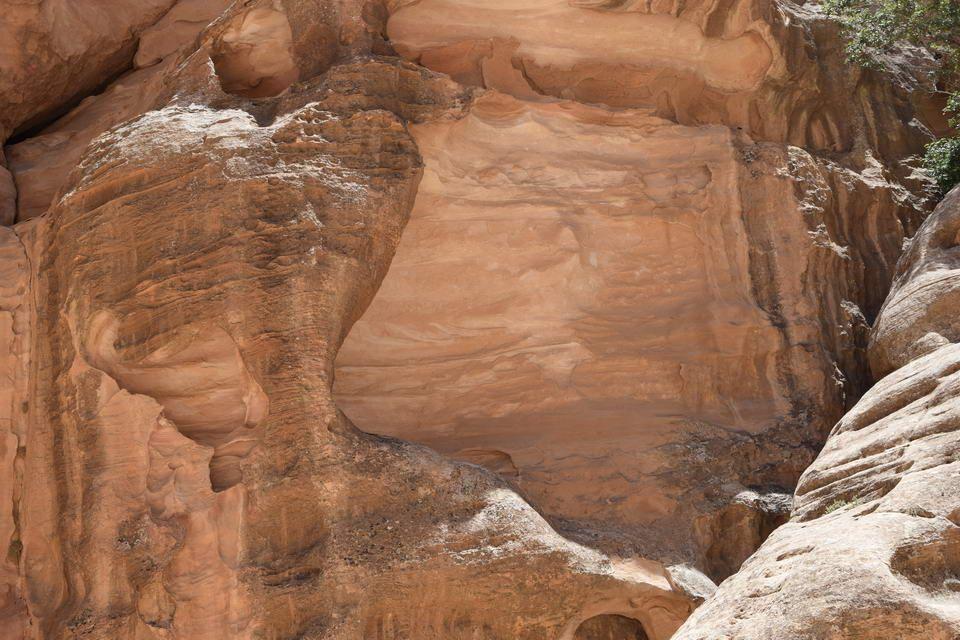
The site is compact: a 450-meter canyon, narrow enough to stay shaded for much of the day, opening into three natural widenings lined with rock-cut chambers.
Little Petra's treasure is the Painted Biclinium, a dining chamber whose ceiling preserves one of the very few surviving examples of Nabataean figurative painting — vines, flowers, and birds rendered nearly 2,000 years ago. Frescoes like these once decorated Petra itself; here, they survived.
At the canyon's far end, a worn Nabataean staircase climbs to a ledge with sweeping views over the sandstone domes toward the Petra basin — one of the best photo spots in the region, and rarely shared with more than a handful of people.
[Image 2 — alt text: "Ancient painted fresco of vines and birds inside the Painted House at Little Petra"]
Little Petra takes 60–90 unhurried minutes. Visit in the morning or late afternoon for the softest light; the shaded canyon makes it one of the area's most forgiving sites even in summer. Wear proper shoes for the smooth, sloping rock stairs and carry water — there are no facilities inside the canyon itself.
Little Petra sits beside the trailhead of the "back door" route to Petra's Monastery, making it the natural first stop on a second Petra day. Travelers on a tight schedule can add it to a Petra day trip with a private driver, or see it as part of a multi-day itinerary that also takes in Beidha's Neolithic village next door — a settlement thousands of years older than the Nabataeans.
Visit Little Petra with Jordan Petra Private Tours. Book your tour today! Read our guide to Petra